Buzz Worthy Rotary Project
A Buzz-Worthy Rotary Project: Expanding Pollinator Habitat at Glen Lake
Contributed by Victoria Saab, Environmental Sub-committee Co-chair
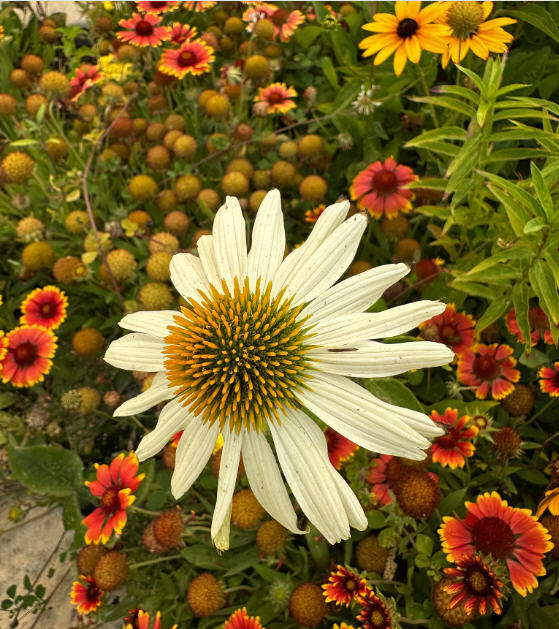 Bozeman Sunrise Rotary Club is proposing to participate in Operation Pollination by expanding the pollinator garden at Glen Lake Rotary Park (GLRP). Operation Pollination began in the Midwestern United States in 2015 to help rebuild pollinator populations that are essential to crop pollination and a secure food supply. Rotary District 5960 (Minnesota and Wisconsin) and its clubs were instrumental in the establishment of Operation Pollination along with many partners, including the National Park Service, US Forest Service, US Fish and Wildlife Service, city governments and private businesses. Operation Pollination has expanded to every region of the Nation to help create a network of gardens that can be used by migrating and resident pollinators.
Pollinators need our help because populations of bees, butterflies, and bats are declining worldwide due to habitat loss, toxic pesticides, diseases, and climate change. They play an essential role in sustaining our food supply. Three-fourths of the world’s flowering plants and about 35 percent of the world’s food crops rely on animal pollinators to reproduce. More than 3,500 species of native bees help increase crop yields. Scientists estimate that one out of every three bites of food we eat exists because of animal pollinators like bees, butterflies and moths, birds and bats, and beetles and other insects. By joining Operation Pollination, we can turn the Glen Lake garden into part of a larger habitat network that helps essential pollinators recover and thrive.
Operation Pollination requires habitat creation, community engagement, and public awareness. Planting mostly native wildflowers will create habitat supporting pollinator species adapted to local plants, while requiring less water and maintenance. We are collaborating with local partners who share this mission, including Bozeman Rotary Club, Sacajawea Audubon Society, Montana Native Plant Society, and the City of Bozeman. New signs at GLRP will help visitors understand how pollinator gardens protect biodiversity and strengthen the food systems for which we depend.
Key elements of a successful pollinator garden
Creating an effective pollinator garden starts with a few key choices:
- Choose primarily native species that bloom from snowmelt through frost, and plant them in groups of three or more so bees can find them more easily.
- Give the garden full sun, protection from wind, and accessible water. Most native bees nest in bare ground or hollow stems so skip the tidy fall cleanup, which also benefits birds that feed on ground insects.
- Avoid using pesticides, a driving factor in pollinator declines. Particularly do not use neonicotinoid-treated plants and seeds, which are intended to kill insects
You can help by planting a pollinator-friendly patch at home; even a small border, a corner, or a few containers can make a difference!
September 2026